How Minor League Affiliates Work (A Fan-Friendly Guide)
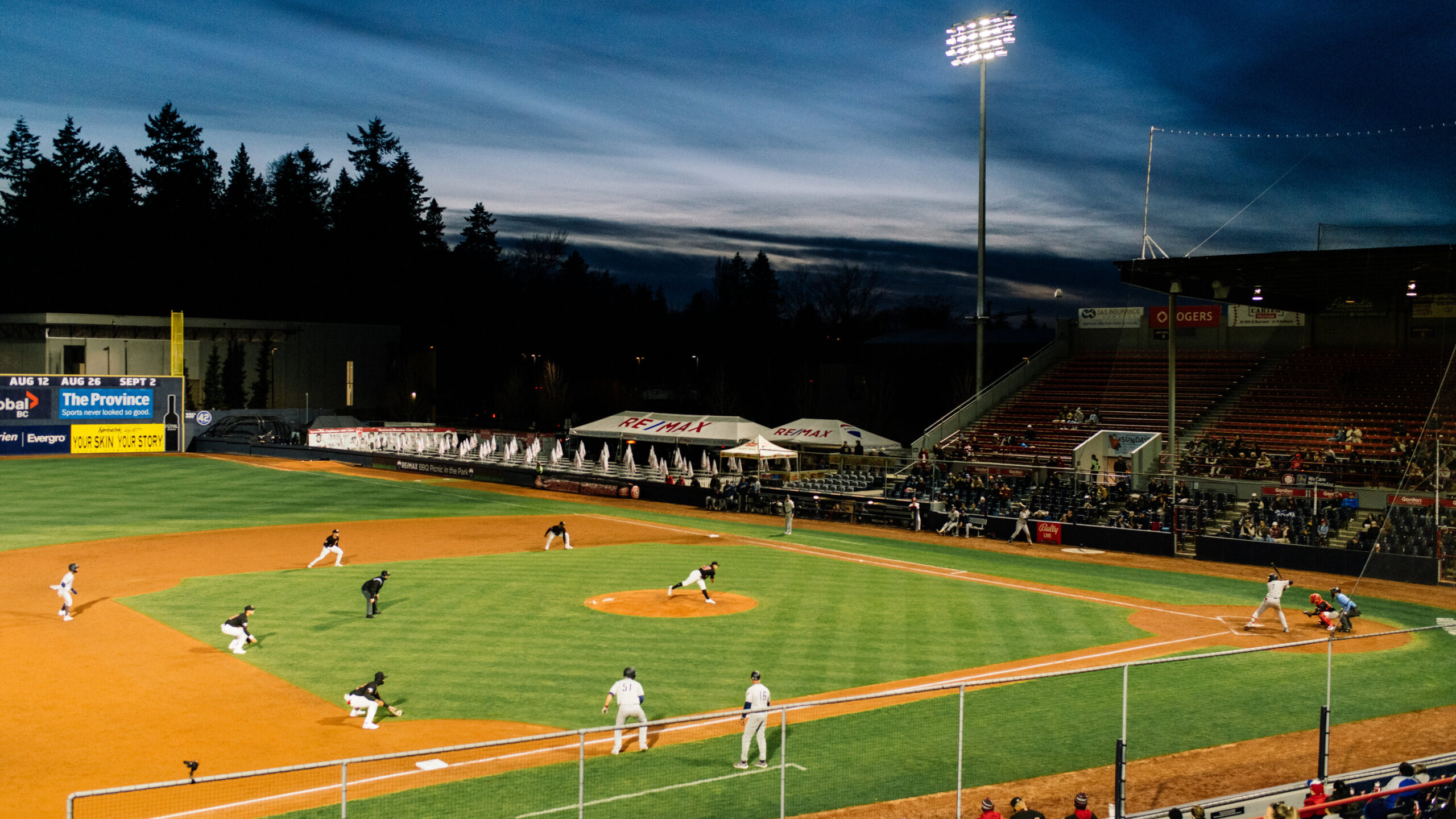
Have you ever gone to a minor league game and wondered, “Why did my favorite player get called up?” or “Why does the roster change every year?” Minor league affiliations explain it all.
Here’s a simple, fan-first breakdown of how it all works and why it makes minor league baseball so fun.
→ Return Home: How Minor League Affiliates Work: Your Inside Guide
The Big Idea (In Plain English)
Minor league baseball exists to help Major League Baseball function.
At its core, minor league teams are development partners for major league organizations. The relationship is straightforward:
- Major League teams supply the players
- Minor league teams host the games
That’s really it.
Your local team doesn’t “own” the players on the field. Those players belong to a major league organization and are assigned to different levels of the minors as they learn, improve, struggle, adjust, and, if all goes well, move one step closer to the big leagues. They’re essentially on loan, spending their days sharpening skills and proving they’re ready for the next call.
Meanwhile, the minor league club focuses on everything else: running the ballpark, engaging the community, creating promotions, and putting on an affordable, fun night at the ballgame. Wins matter, but development comes first. Lineups change, rosters turn over, and stars you fall in love with might be gone tomorrow, because that’s the system working as designed.
Minor league baseball sits at the intersection of player development and local entertainment. It’s where future major leaguers are built, and where communities get baseball that feels close, accessible, and personal, even if the players are only passing through.
Who’s Actually in Charge?
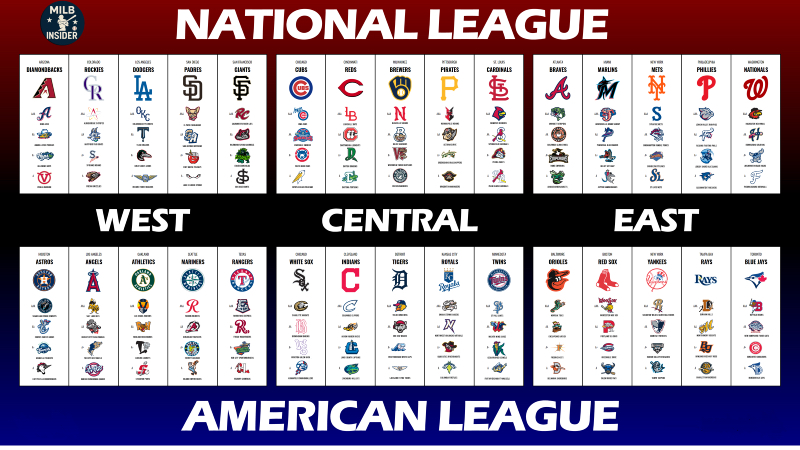
Minor league baseball works because responsibilities are split cleanly between two sides.
Major League Team
- Drafts and signs players
- Decides which level each player is assigned to
- Promotes players or sends them down
- Oversees coaching, training, and long-term development
The major league organization controls everything related to player development and on-field decisions. Their priority is preparing players for the big leagues, not winning a specific minor league game on a given night.
Minor League Team
- Sells tickets and season plans
- Runs promotions, giveaways, and theme nights
- Designs the ballpark atmosphere and game-day experience
- Manages branding, mascots, and community engagement
The minor league club handles everything fans actually see and feel at the ballpark. From between-inning antics to local partnerships and family-friendly pricing, this side of the operation is built around entertainment and connection.
MLB runs the baseball.
The minor leagues run the experience.
And while the players may be passing through, the fun stays completely local.
Why Players Come and Go So Often
Minor league rosters change constantly, and that is entirely by design.
Players can be:
- Promoted to the next level
- Sent down to work on specific skills
- Placed on rehab assignments after injury
- Moved to make room for another player in the system
Because of this, continuity is rare. A lineup you see in April may look completely different by July.
Winning matters, but development matters more. When a player shows he is ready for a bigger challenge, the organization moves him up, even if he is your team’s best hitter, top pitcher, or most recognizable name. Success in the minors is measured less by standings and more by progress.
That is why minor league fans often say:
“The team changes, but the logo stays.”
Players come and go, but the identity of the club, the ballpark, and the community around it remain. That constant churn is not a flaw in the system. It is the system working exactly as intended.
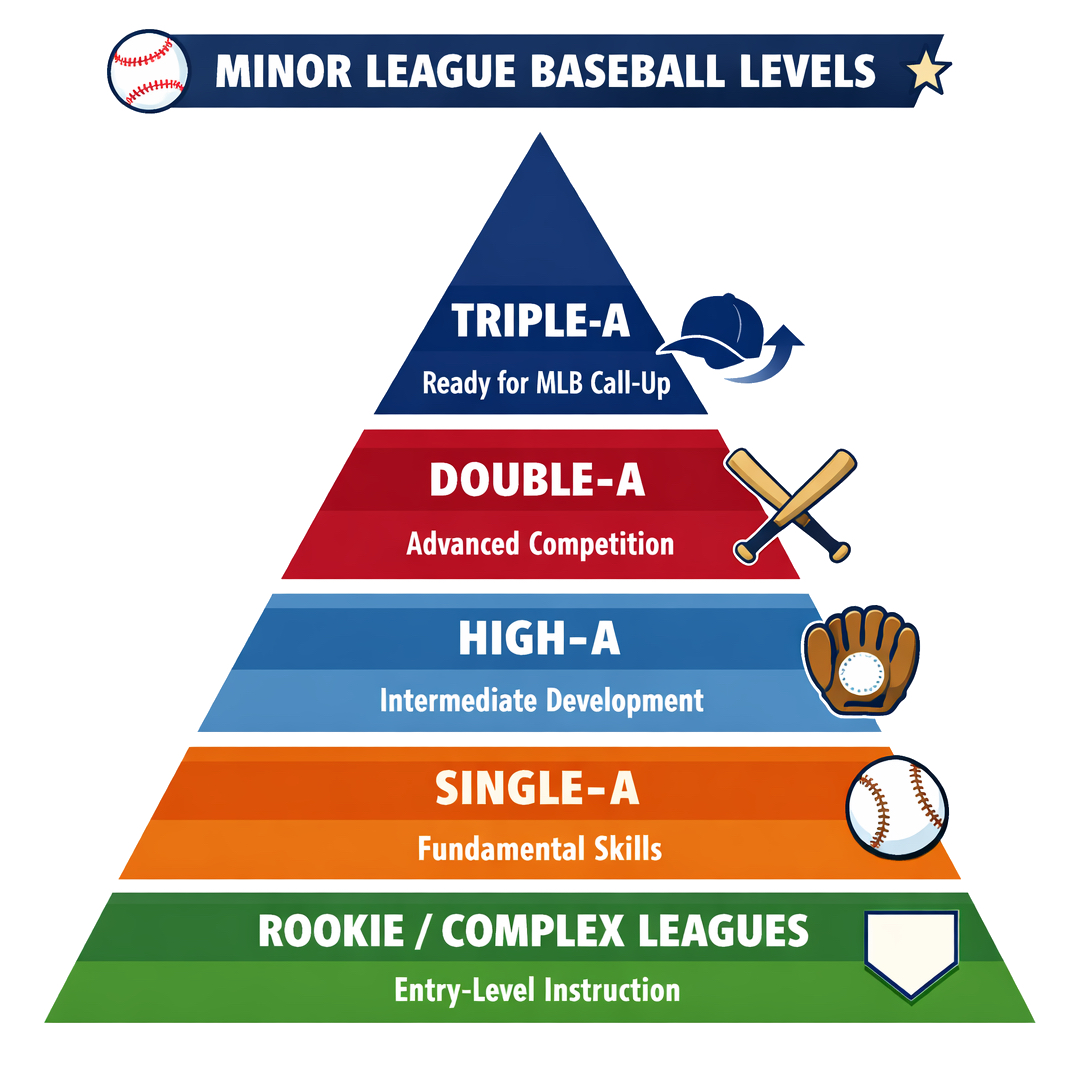
The Levels (Think of a Pyramid)
Each MLB team has players spread across several levels:
• Triple-A (AAA) – One step from the majors
• Double-A (AA) – Where top prospects prove themselves
• High-A – Skill refinement and consistency
• Single-A – Learning pro baseball fundamentals
• Rookie / Complex Leagues – First taste of pro ball
Players move up and down this pyramid depending on performance, health, and team needs.
Why Your Team Isn’t Built Just to Win
Minor league teams do not build rosters the way major league teams do.
A hot hitter might be promoted in the middle of the season. Another struggling prospect might stay put to focus on mechanics or approach. A pitcher may only throw a few innings by design, regardless of the score.
Decisions are made with development in mind, not with the standings as the priority. Lineups are shaped around learning opportunities, workload limits, and long-term potential rather than short-term results.
The goal is to prepare players for the major leagues, not to stack a roster for a championship run.
When your team wins, that is a good night at the ballpark.
When a player gets called up, that is the real victory.
What “Affiliated” Really Means
If your team is affiliated with a major league club, it means a few important things.
- Every player on the roster belongs to that major league organization
- Coaching philosophies, training methods, and terminology mirror the parent club
- The players on the field are part of that franchise’s future
You are not just watching a random collection of talent. You are seeing prospects being shaped to fit a specific system, learning the same approach and expectations they will carry to the next level.
Today’s minor leaguer could be tomorrow’s big-league starter, bullpen arm, or everyday player. And long before the highlight reels and national broadcasts, you saw them first, up close, wearing your local colors.
Do Affiliations Ever Change?
Yes, but not often.
Affiliations are set through long-term agreements between major and minor league organizations. These partnerships usually last several years at a time, which gives stability to both player development and local operations.
- The minor league team keeps its name, history, and identity
- The major league organization supplies the players and development staff
- The pipeline of prospects can change when agreements expire
If an affiliation does switch, the team does not move. The ballpark stays put, the logo stays the same, and the community connection remains intact. What changes are the players, coaches, and the developmental system behind them.
For fans, it simply means a new set of future big leaguers to watch, even though the team they cheer for never left.
Why Fans Love Minor League Baseball
Affiliations are a big part of what makes minor league baseball special.
- You are close to the action, both on the field and in the stands
- Tickets are affordable and easy to build into a routine
- The atmosphere is relaxed, welcoming, and built for fun
- You get to say, “I saw him before he was famous”
Every game is not just about the score that night. It is part of a player’s journey through the system, one step in a longer story that may eventually lead to the major leagues.
When you attend a minor league game, you are not just watching baseball. You are catching a chapter in progress, and sometimes, it turns out to be the beginning of something much bigger.
The Takeaway
Minor league baseball isn’t about perfection, it’s about progress.
Affiliations connect small towns and big cities, prospects and superstars, tonight’s game and tomorrow’s headline. When you watch a minor league game, you’re not just watching baseball, you’re watching the future take shape.
→ Return Home: How Minor League Affiliates Work: Your Inside Guide
Who’s your favorite minor league team? Comment below!
Share this content:
Post Comment